The History of The Barley Mow 1500-2015
The Barley Mow has been serving ale since at least 1568, when former local pikeman John Smalpece obtained a licence to keep an alehouse. Originally named The Mount Eagle after the lords of West Horsley Place, the building began life as a modest Tudor husbandman’s cottage with a smoke-bay hearth and hand-hewn timbers. Over four and a half centuries, through the English Civil War, changes of name, and village auctions, it has stood firm as a welcoming secular retreat and the living heartbeat of West Horsley.
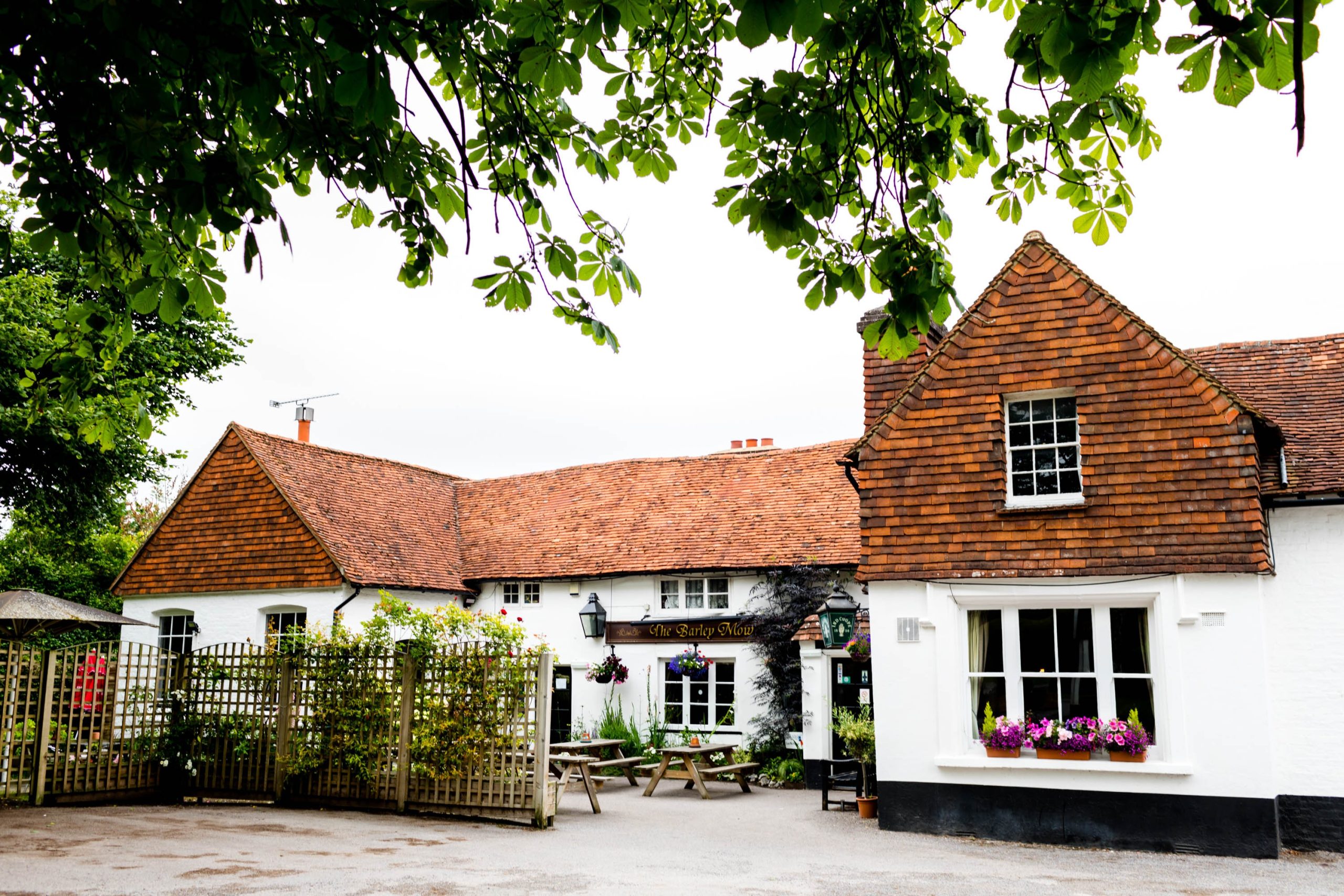
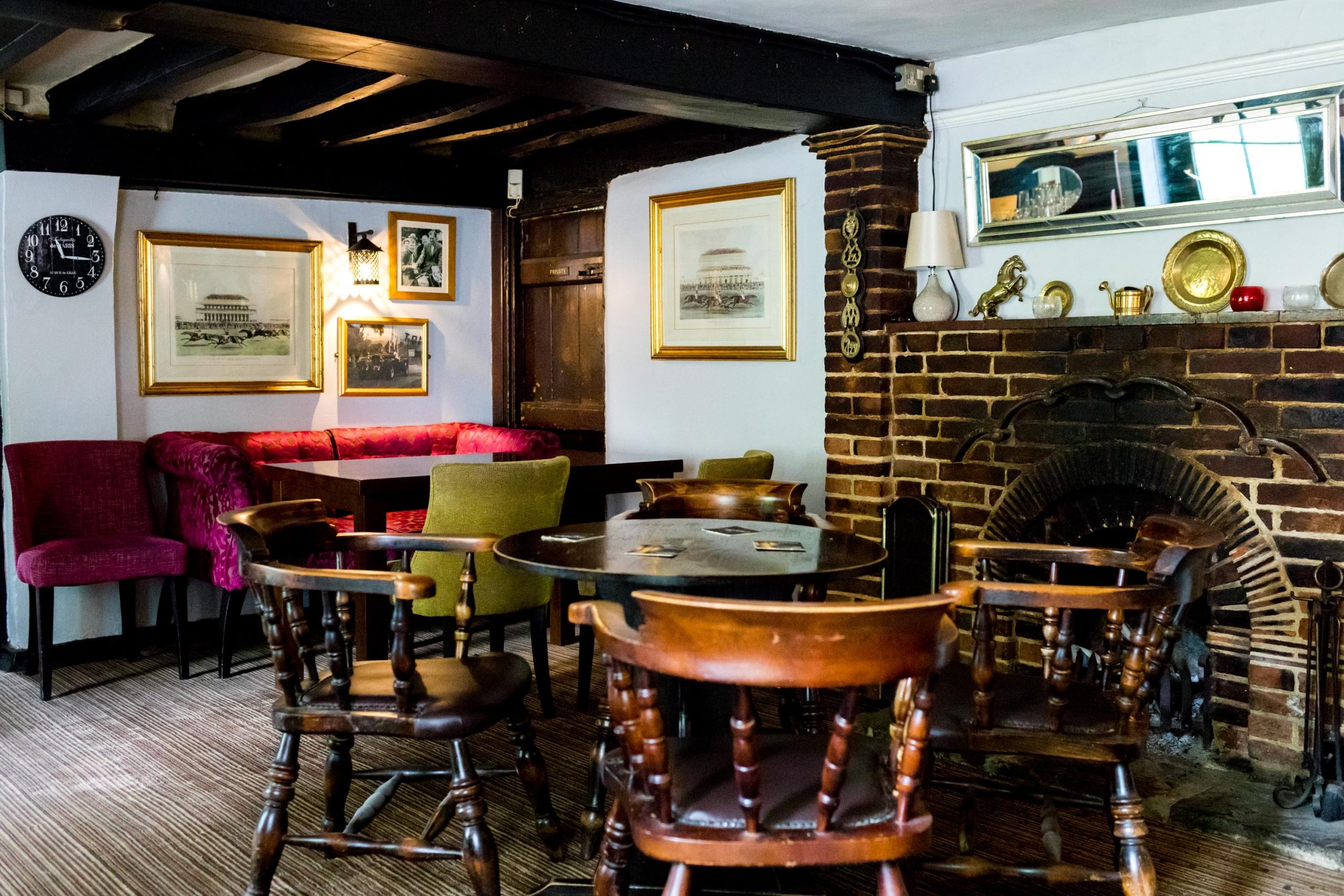
From a 16th-century alehouse to an inviting country retreat, The Barley Mow remains the authentic social cornerstone of West Horsley.
Surrey Hills Heritage
With blackened ceiling timbers, a past sheltering secret priest holes, and generations of village gatherings, our doors remain warmly open to all.
THE EARLY YEARS
The Barley Mow has been serving ale from at least 1568 when John Smalpece applied for a licence to keep an ale house. He is the first licensee we have a record of and at that time the pub was called ‘The Mount Eagle’ after the Montague family who held West Horsley from 1554 to 1642.
The building itself is a smoke-bay house as can be seen from the blackened timbers inside of the smoke bay frame in the roof. Smoke-bay houses date from c 1550. This one, however, started earlier as a small husbandman’s cottage probably with a central hearth in the middle of the floor, although it is difficult to say with certainty.
The roof was repaired during the last war, following bomb damage: The roof of the middle section is of quite a crude form of construction as befits a peasant farmer, made from thin tree trunks with their bark still on, tapering to the apex in the roof – it is a wonder it has survived all these centuries. When a man was granted land, it was up to him to build his own house and the recipient would have been quite poor. When John Smalpece, an ex-pikeman in the local militia, took the property over in 1568 he probably added the smoke-bay, which a recent renovation, aimed at keeping the smoke in one place, thus making it more pleasant for people to sit and drink their ale.
The oldest ale house in West Horsley dates from the Reformation (1534). It was the old Church House which was subsequently named ‘The Red Lion’. At that time all church property was acquired by the Crown. Consequently the ‘Old Church House’ was sold but it still retained the right to brew all the ale for the village because it had to be at a certain standard as it was the only thing people had to drink. That meant that John Smalpece would have been buying all his ale from ‘The Red Lion’. Later on, however, ‘The Red Lion’ found it was losing money because it was dependant on passing trade and all the locals found it more convenient to go to the ‘Mount Eagle’ which was much nearer to where they lived.
The Montague family were Roman Catholics and sometime during the period they were at West Horsley Place. The landlord of ‘The Mount Eagle’ was urged to build a proper hearth on the back wall of the parlour with a priest hole in the chimney. It consisted of a narrow staircase, hidden behind some wainscoting, leading to a small chamber in the chimney with an escape door inside the timber framing upstairs. Probably at the same time the hearth was built an extra bay was added on the South end and an extra wing added at the North East. The roof timbers of these two areas are of much better quality and consists of sawn timbers.
THE MAIN HISTORICAL POINTS
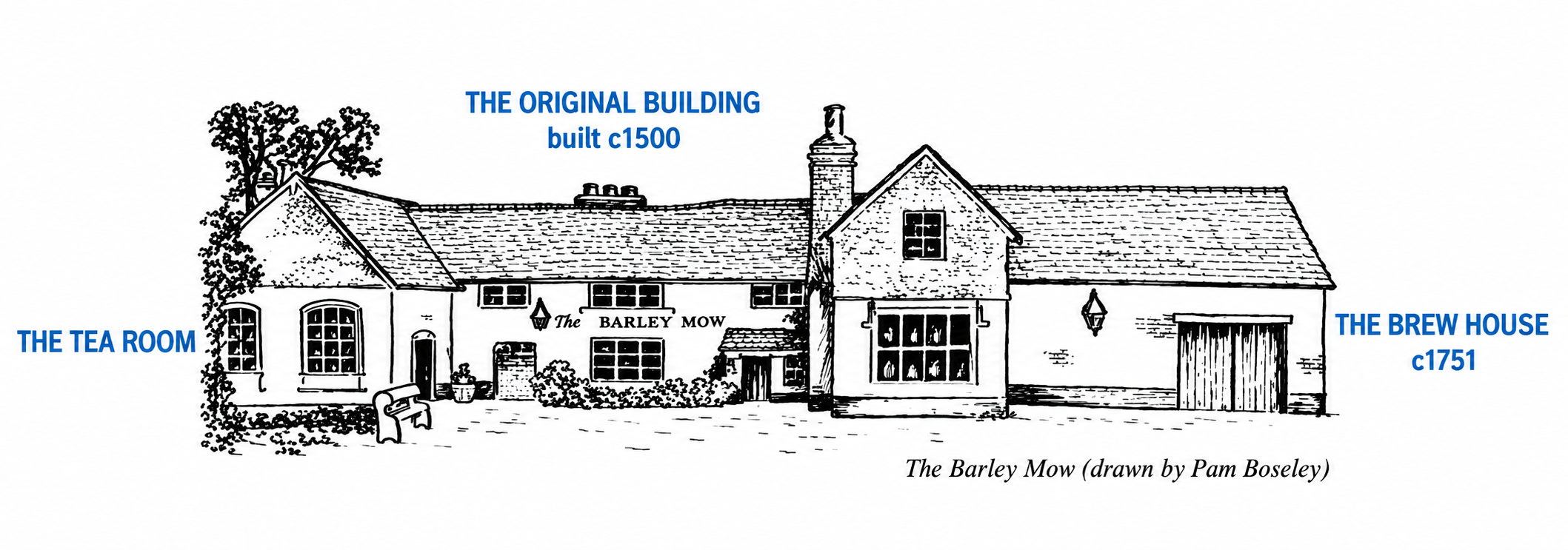
Soon after the Civil War began in 1642 the last of the Montague family had the property sequestrated by the Round Heads. It was not deemed safe to mix with either Roman Catholics or Royalists, so the name of ‘The Mount Eagle’ was changed to ‘The Harrow’ and the priest hole was blocked up. ‘The Red Lion’ finally closed in 1751 and ceased to brew ale, so ‘The Harrow’ now began to brew its own ale. In order to do that, certain additions had to be made to the building. First of all it had to have a brew house, which is the piece jutting out which looks like a garage and secondly, it had to have a malt-house which is the piece added on to the former stables and now called somewhat erroneously “the barn”. To mark this new direction in the history it changed its name once more to ‘The Barley Mow’ to advertise the fact. Ale was made out of barley in those days and not hops and the family still retained their farm.
There is a sale catalogue of 1769 which lists the last known owner of the property as Mr Edward Tickner. It also touchingly lists all the cows and horses by their names. The cows were Cherry, Bren, Strawberry, Flower, Coot, Fair-face and Spider. The cart horses were Wag, Captain, Poppet and Jack. The Barley Mow had a kitchen, drink room, dairy and parlour on the ground floor, four upper rooms and a cellar. Outside there was a turf house, brew house, granary, cart house, stable, straw-barn, oats-barn, wheat-barn, dutch barn and a rick yard.
‘The Barley Mow’ became the main secular gathering place, auction sales and inquests were held here. Even a church vestry meeting took place here in 1849 when the new vestry room was being built at St Mary’s church.
The Census Returns for the 19th century gives us information about the publicans, their families where each was born and also who was staying at the inn at the time. Most were Surrey born; there was one publican who came from Warwickshire and one who’s wife came from Yorkshire which shows how the new railway contributed to moving people round the country. In 1861 the Census Return shows that the publican had a wife and six children and there were five lodgers who were all single men who worked as agricultural labourers. This was a time of great hardship and agricultural workers had to move around to find work.
MORE RECENT TIMES
In 1888 the Barley Mow was part of the Hatchlands estate sold off to the old Guildford Brewery which was then called Lascelles, Tickner & Co. In the late 19th century and early 20th century the countryside became a Mecca for the new sport of cycling. People came down by train with their bicycles and spent Saturday nights at places that did bed and breakfast followed by high tea in a pub before going home on the train. ‘The Barley Mow’ had an extension built for this purpose. At some time in the 19th century the whole building was plastered and painted white but the timber framing can still be seen in the upstairs rooms.
During World War II a stick of bombs fell along The Street, the last bomb falling behind The Barley Mow. It brought down the Chimney which fell through the roof. The open hearth was also destroyed which was when the priest hole was discovered. It had a half candle in it and a hazel club. The old hearth was replaced with a modern one.